The best time to visit North India and Rajasthan is October to March, with November, February and early March as the nicest months: dry, sunny and not too hot.
The difference between a great trip and a hard one is often just one thing: the month you choose.
India is as big as Europe. When the weather is perfect in Rajasthan, it can be snowing in the mountains and raining in the south. So there is no “perfect month for all of India”. But there is a perfect month for your route. It depends on where you want to go, how well you handle heat and cold, and whether you want to see a festival like Holi or Diwali.
On this page you will find, month by month and region by region, when it is best to travel to India. We look at Delhi and Agra, Rajasthan, Varanasi and Nepal: the areas where our drivers drive every week. You will also read when the main festivals fall in 2027, how to deal with winter fog and the monsoon, what to pack and how to plan around school holidays.
“We can go in February or in April. Does that really make such a difference for a trip through Rajasthan?” – a question we get almost every week
Quick answer
Yes, it makes a big difference. February is one of the best months: 20 to 25 °C during the day, dry and sunny. In April it is already 35 to 40 °C in Rajasthan, so you can only walk around comfortably early in the morning and in the evening. For North India, the Golden Triangle and Rajasthan, the best time is October to March. December and January are the coolest and busiest months, with a chance of morning fog around Delhi and Agra. Combining with Nepal? Choose October, November, March or April for the best mountain views.
On this page
- When is the best time to visit India?
- India’s three seasons explained
- India month by month: January to December
- Best time to visit by region
- The Golden Triangle: Delhi, Agra and Jaipur
- Rajasthan and the desert
- Varanasi and the Ganges
- Combining India with Nepal
- Festivals in 2027 to plan your trip around
- Winter fog: what to keep in mind
- Heat and monsoon: can you still travel?
- Crowds, prices and when to book
- Travelling in the school holidays
- What to pack for each season
- How to plan your trip with our drivers
1. When is the best time to visit India?
For most travellers from Europe, the best time to visit India is October to March. North India is then dry, sunny and pleasantly warm during the day. This is exactly the area of the classic round trips: Delhi, Agra with the Taj Mahal, Jaipur, the forts and palaces of Rajasthan and the holy city of Varanasi.
Within those six months there are differences. October and March are already warm, December and January are cool and sometimes foggy, and November and February sit nicely in between. If you ask us for the very best months, we say November, February and the first half of March.
- Best months: November, February and early March.
- Peak season: mid-December to mid-January, around Christmas and New Year.
- Too hot for Rajasthan: April, May and June.
- Monsoon: July, August and September; green, but with showers.
Babu’s tip: “If you want to travel calmly in good weather, choose February. The Christmas crowds are gone, the fog has usually cleared and it is not hot yet.”
2. India’s three seasons explained
In North India we do not really have four seasons like in Europe, but three: the cool season, the hot season and the monsoon. Each season has its own character, and even the hot season has advantages if you choose the right region.
| Season | Months | Weather in North India | For whom? |
|---|---|---|---|
| Cool season | October – March | Dry and sunny, 20–30 °C during the day, cool nights | Almost everyone: the best time for a round trip |
| Hot season | April – June | Hot and dry, often 38–45 °C | Only for the mountains in the north, or if there is no other option |
| Monsoon | July – September | Warm and humid, regular showers, everything green | Travellers looking for quiet and low prices |
The cool season is high season. You notice it in hotel prices and at the famous monuments. Still, it is worth it: you can be outside all day, and long drives are much nicer when it is not 40 degrees.
3. India month by month: January to December
Below you can see what to expect each month in Delhi, Agra and Rajasthan. The temperatures are average daytime temperatures for Delhi; in the desert around Jaisalmer it is a little warmer during the day and colder at night. The weather of course differs from year to year. You can find current forecasts at the India Meteorological Department.
| Month | Daytime (approx.) | Weather | Our advice |
|---|---|---|---|
| January | 20 °C | Cool, sunny, morning fog possible | Good, bring a warm jumper |
| February | 24 °C | Sunny and dry | One of the best months |
| March | 30 °C | Warm, Holi festival | Very good, especially the first half |
| April | 36 °C | Hot and dry | Only go out early, or head to the mountains |
| May | 40 °C | Very hot | Not for Rajasthan |
| June | 39 °C | Very hot, monsoon starts late June | Not recommended |
| July | 35 °C | Monsoon, humid | Possible, quiet and green |
| August | 34 °C | Monsoon, showers | Possible, Udaipur is beautiful |
| September | 34 °C | Last showers, getting drier | Reasonable, especially late September |
| October | 33 °C | Dry, warm, Diwali | Very good |
| November | 28 °C | Sunny and pleasant | One of the best months |
| December | 22 °C | Cool, sunny, chance of fog | Good, but busy around Christmas |
Please note: these are averages. At night in December and January it can cool down to 5 to 8 °C in Delhi and in the desert. Many hotels in Rajasthan have no central heating, so a warm layer for the evening is not a luxury.
4. Best time to visit by region
Because India is so big, the best time to visit differs by region. This table shows the areas that are most often part of our trips, plus the south and the Himalaya for comparison.
| Region | Best months | Better to avoid |
|---|---|---|
| Delhi, Agra and Jaipur (Golden Triangle) | October – March | May – June |
| Rajasthan and the Thar Desert | November – February | April – June |
| Varanasi and the Ganges | October – March | May – June, and high water in August |
| Nepal (Kathmandu, Pokhara, Chitwan) | October – November and March – April | July – August |
| Ladakh and Himachal Pradesh (Himalaya) | June – September | November – April (roads closed) |
| Kerala and Tamil Nadu (South India) | November – February | June – August |
You can see that October to March is good for almost all the popular areas. Only the high Himalaya, like Ladakh, is at its best in summer. Want to visit India in summer? Then the mountains are a good alternative to the heat on the plains.
5. The Golden Triangle: Delhi, Agra and Jaipur
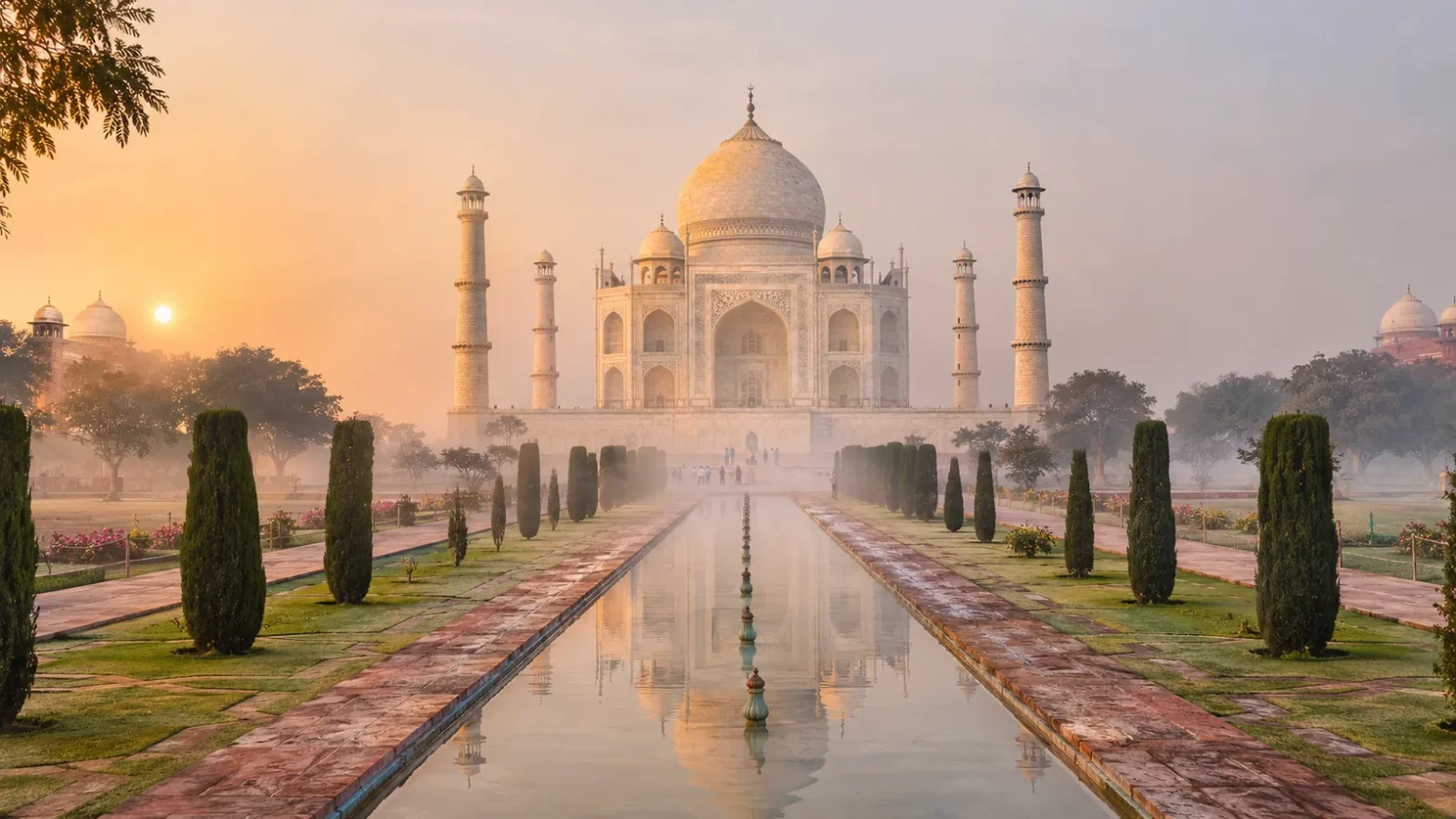
The Golden Triangle is India’s best-known route and is good to travel from October to March. In the coolest months, December and January, it is lovely to walk around during the day, but there may be fog in the morning. That can make the drive between Delhi and Agra a bit longer and limit the view of the Taj Mahal at sunrise.
- Best months: November, February and March.
- Taj Mahal: closed every Friday, so plan your visit on another day. See the official Taj Mahal website for opening hours.
- How many days: 7 to 8 days for a relaxed route.
- Car with driver: from €59 per day, see our prices.
Babu’s tip: “In December and January I always check in the morning whether the fog around Agra has lifted. If it is foggy, we go to the Taj Mahal later. The light is still beautiful and you see much more.”
6. Rajasthan and the desert
Rajasthan is a desert state, and you feel it in the weather. From November to February the days are pleasant, even in Jaisalmer and Bikaner. In the desert the nights can get cold, especially if you sleep in a desert camp. From April it gets very hot, and a trip through the desert is no fun anymore.
- Best months: November to February.
- Desert camp near Jaisalmer: beautiful in December and January, but bring warm clothes for the night.
- Jaisalmer Desert Festival 2027: 18 to 20 February (confirm the dates shortly before you travel with Rajasthan Tourism).
- Full route: see our guide Rajasthan with a private driver with the 16-day route.
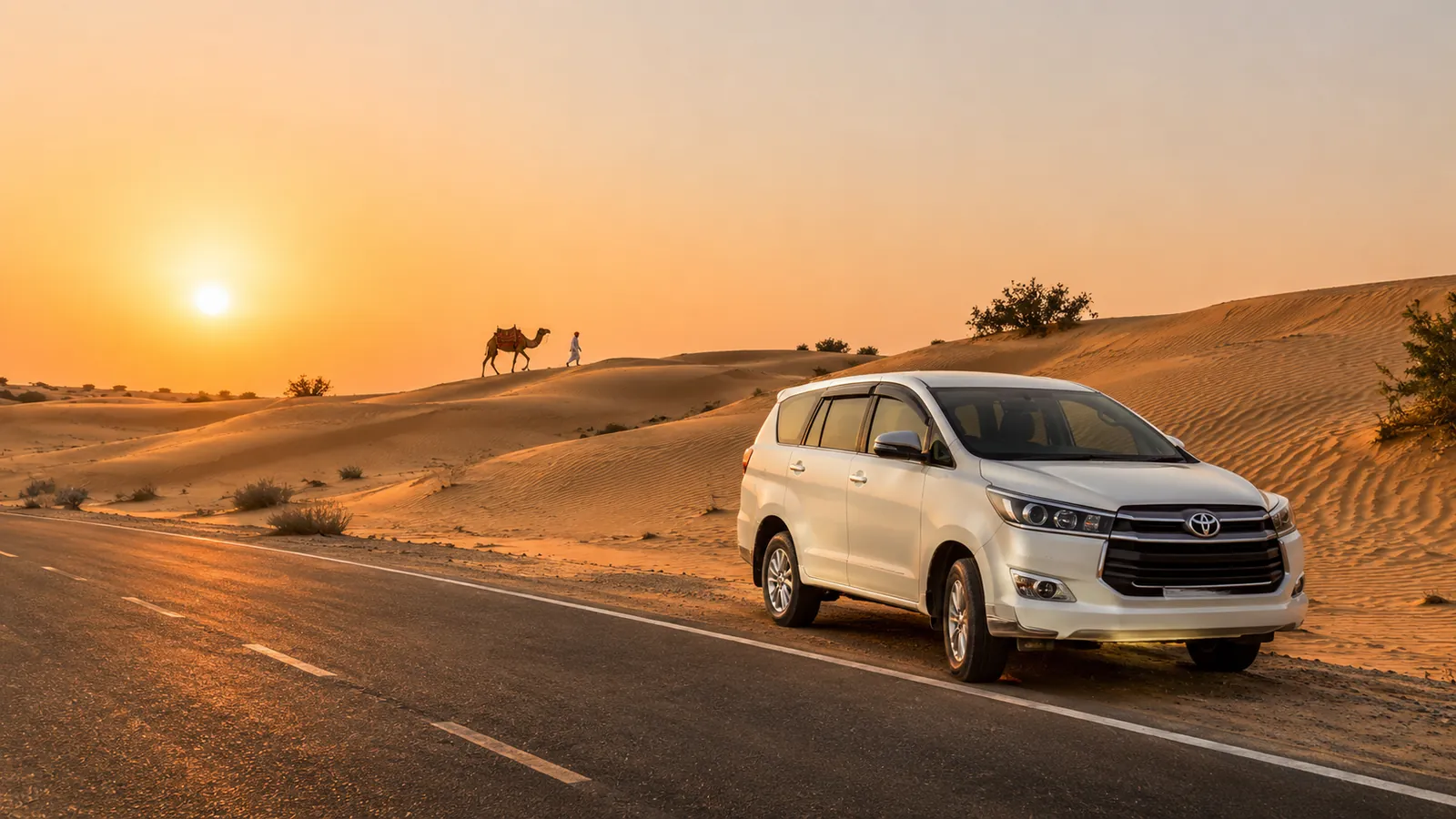
Babu’s tip: “In winter I plan the long drives to Jaisalmer and Bikaner in the morning. Then you arrive with a few hours of sun left and can see the sunset in the dunes.”
7. Varanasi and the Ganges
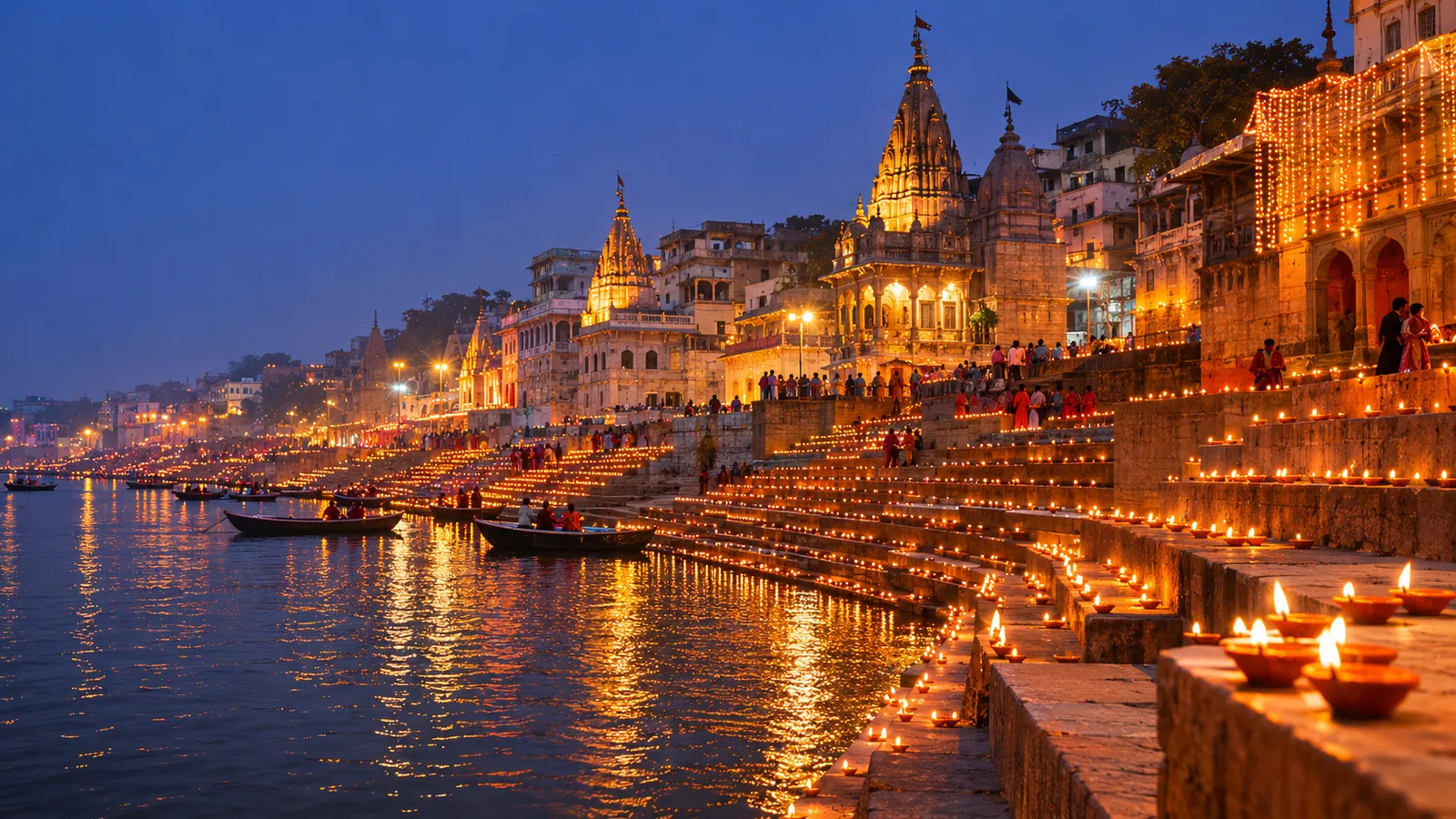
Varanasi is one of the oldest cities in the world and the spiritual heart of India. Here too, the best time is October to March. A sunrise boat ride on the Ganges and the evening Ganga Aarti ceremony on the ghats are at their most beautiful then. In December and January it is cold in the morning and sometimes very foggy on the water, which gives a special atmosphere.
- Best months: October, November, February and March.
- Special: around Diwali and Dev Deepawali (the full moon after Diwali) the ghats are lit with thousands of lamps.
- Monsoon: in August the Ganges is high and the boats sometimes do not go out.
8. Combining India with Nepal
With our drivers you can combine India and Nepal in one trip, with the same driver. A trip through Nepal is only possible in combination with India. How the border, the route and the costs work is explained in our guide to the India and Nepal tour with car and driver. For Nepal the best months are October and November: after the monsoon the air is clear and you see the Himalaya from Pokhara at its best. March and April are also good, with rhododendrons in bloom, although the view is sometimes a bit hazier.
| Period | India (north) | Nepal | Combination? |
|---|---|---|---|
| October – November | Very good | Very good, clear mountains | Ideal |
| December – January | Good, cool | Cold in the mountains, but clear | Good, with warm clothes |
| February – March | Very good | Good, getting warmer | Ideal |
| April | Hot on the plains | Good, rhododendrons in bloom | Possible, Nepal first |
| June – September | Hot or monsoon | Monsoon, little mountain view | Not recommended |
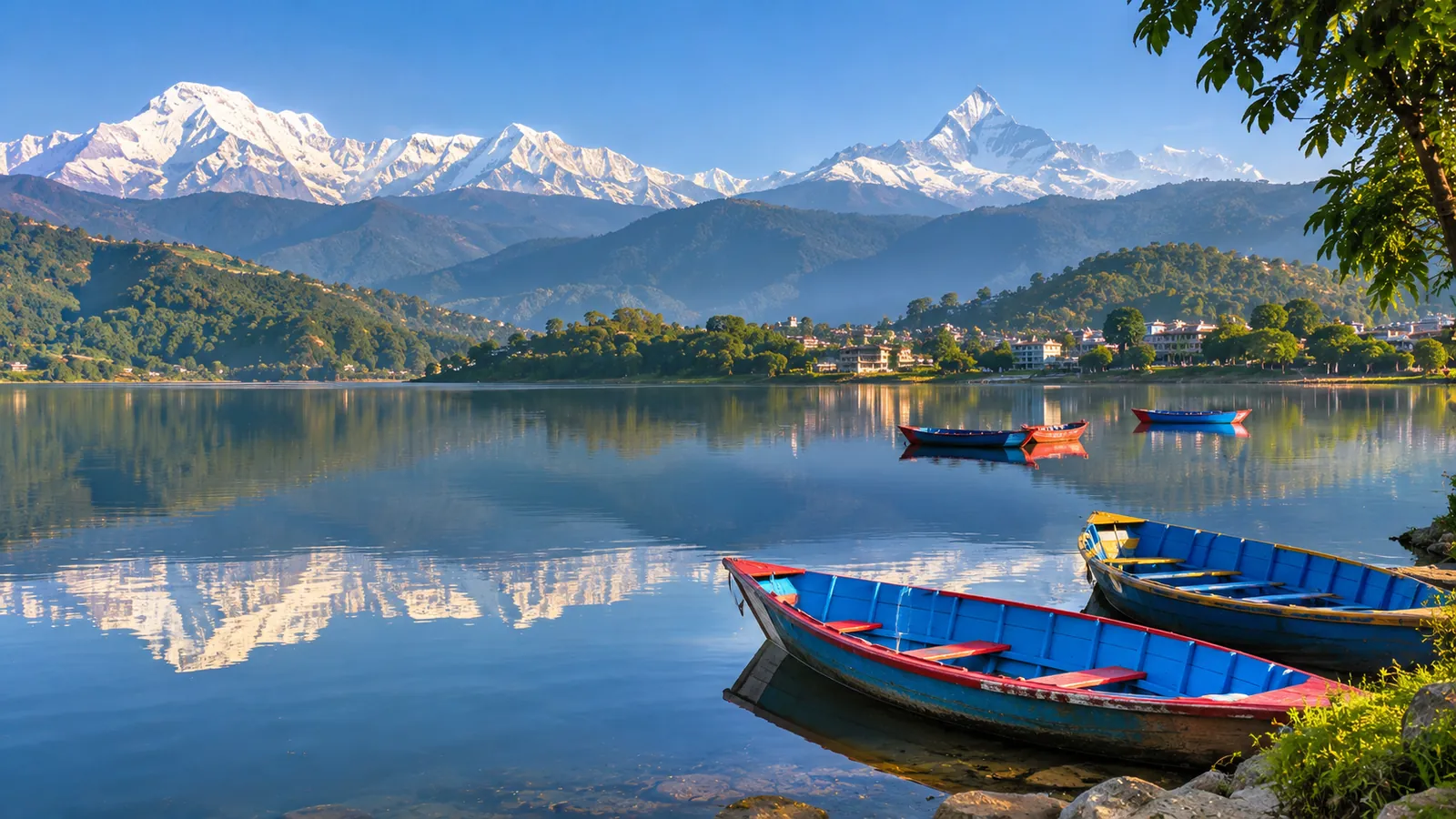
You can find more routes with India and Nepal in our trip examples.
9. Festivals in 2027 to plan your trip around
Seeing a festival is one of the best experiences in India. Hindu festivals follow the lunar calendar, so the dates move every year. These are the main festivals in 2027 on our drivers’ routes.
| Festival | Date 2027 | Where | What you see |
|---|---|---|---|
| Makar Sankranti (kite festival) | 14 January | Jaipur and Gujarat | A sky full of kites |
| Desert Festival | 18 – 20 February | Jaisalmer | Camel races, music and dance in the dunes |
| Holi | 22 March (Holika Dahan on 21 March) | All of North India | The festival of colours |
| Teej | August | Jaipur | Processions and traditional dress |
| Diwali | 29 October | All of India | Festival of lights with lamps and fireworks |
| Pushkar Camel Fair | early November, until the full moon around 14 November | Pushkar | The largest camel fair in the world |
These dates come from public Hindu calendars and can shift by a day. Check them again shortly before you travel.
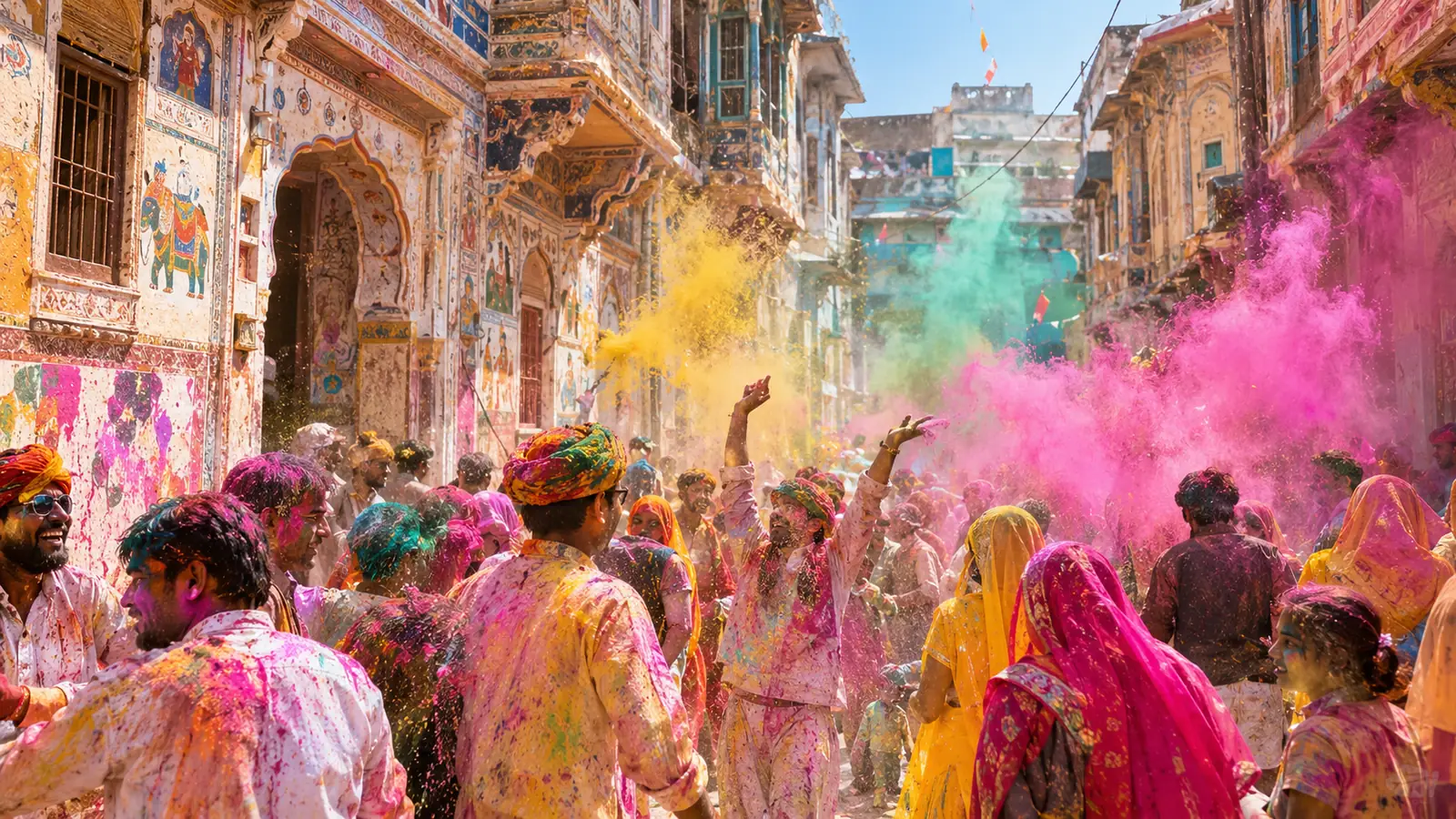
Babu’s tip: “At Holi the streets can get very wild. I advise guests to join in the morning near their hotel or in a quiet neighbourhood, and stay inside in the afternoon. Around Diwali and the Pushkar fair, hotels fill up quickly, so book early.”
10. Winter fog: what to keep in mind
From mid-December to the end of January there can be thick morning fog on the plains of North India, especially around Delhi, Agra and Varanasi. That is no reason not to go, but it is good to keep it in mind.
- Driving times: a drive can be slower in the morning. Your driver drives calmly and prefers to leave a little later.
- Flights and trains: can be delayed. Plan a buffer around your international flight.
- Taj Mahal at sunrise: in fog you sometimes see little. Then go later in the morning or in the afternoon.
- Safety: our drivers do not drive in fog in the dark. We always agree on that.
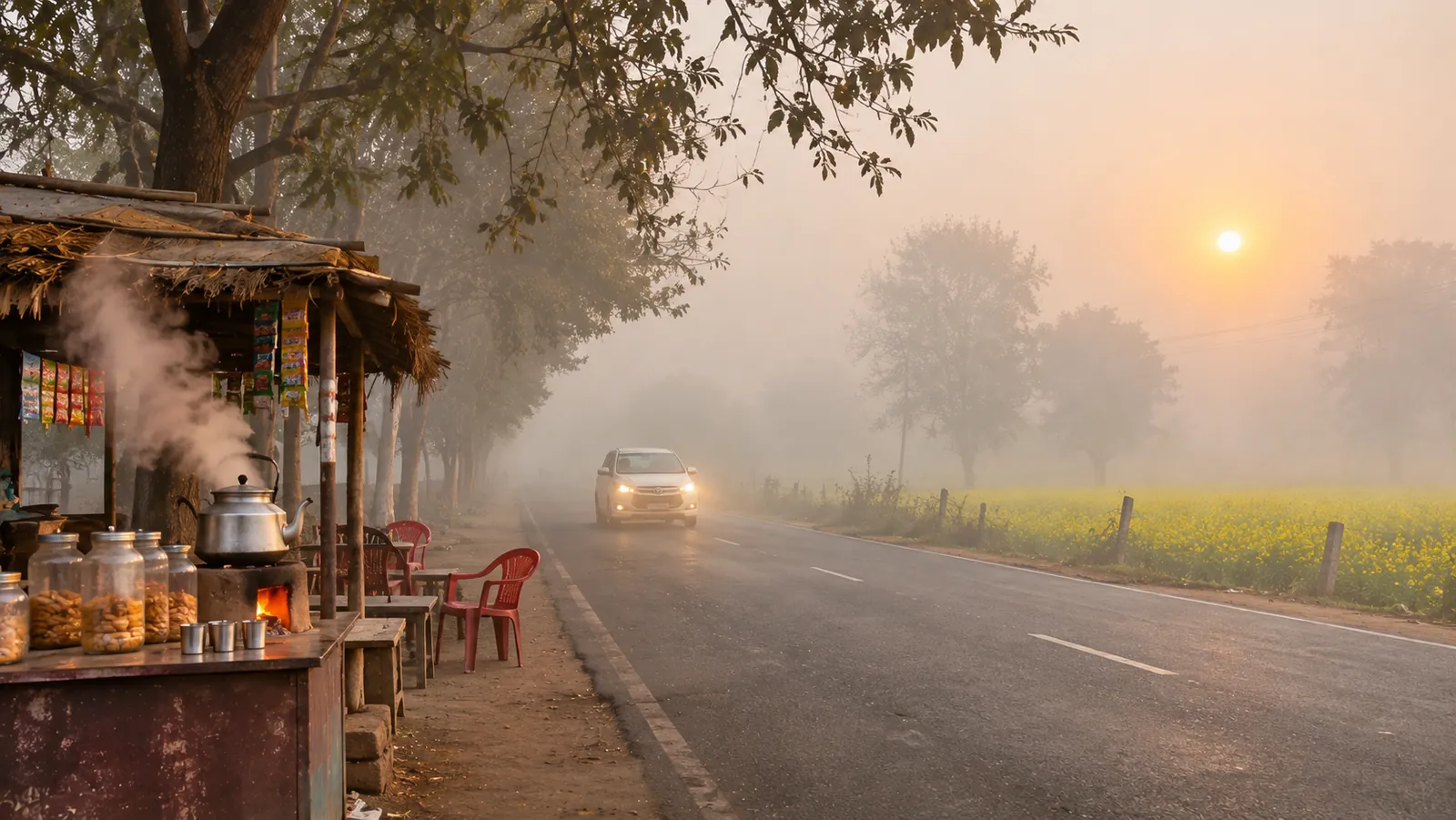
Babu’s tip: “In the fog months I plan long drives after breakfast. After ten o’clock the fog usually lifts, and then we drive safely and relaxed.”
11. Heat and monsoon: can you still travel?
Yes, you can, but be honest with yourself about how well you handle heat. The hot season starts in April, and in May and June it is often above 40 °C in Rajasthan. You can then only walk around early in the morning and late in the afternoon. Luckily all our cars have air conditioning.
The monsoon usually starts in North India at the end of June and lasts into September. It does not rain all day, but there are often a few heavy showers. The landscape turns beautifully green and the monuments are quiet. Udaipur, the city of lakes, is especially lovely in the monsoon.
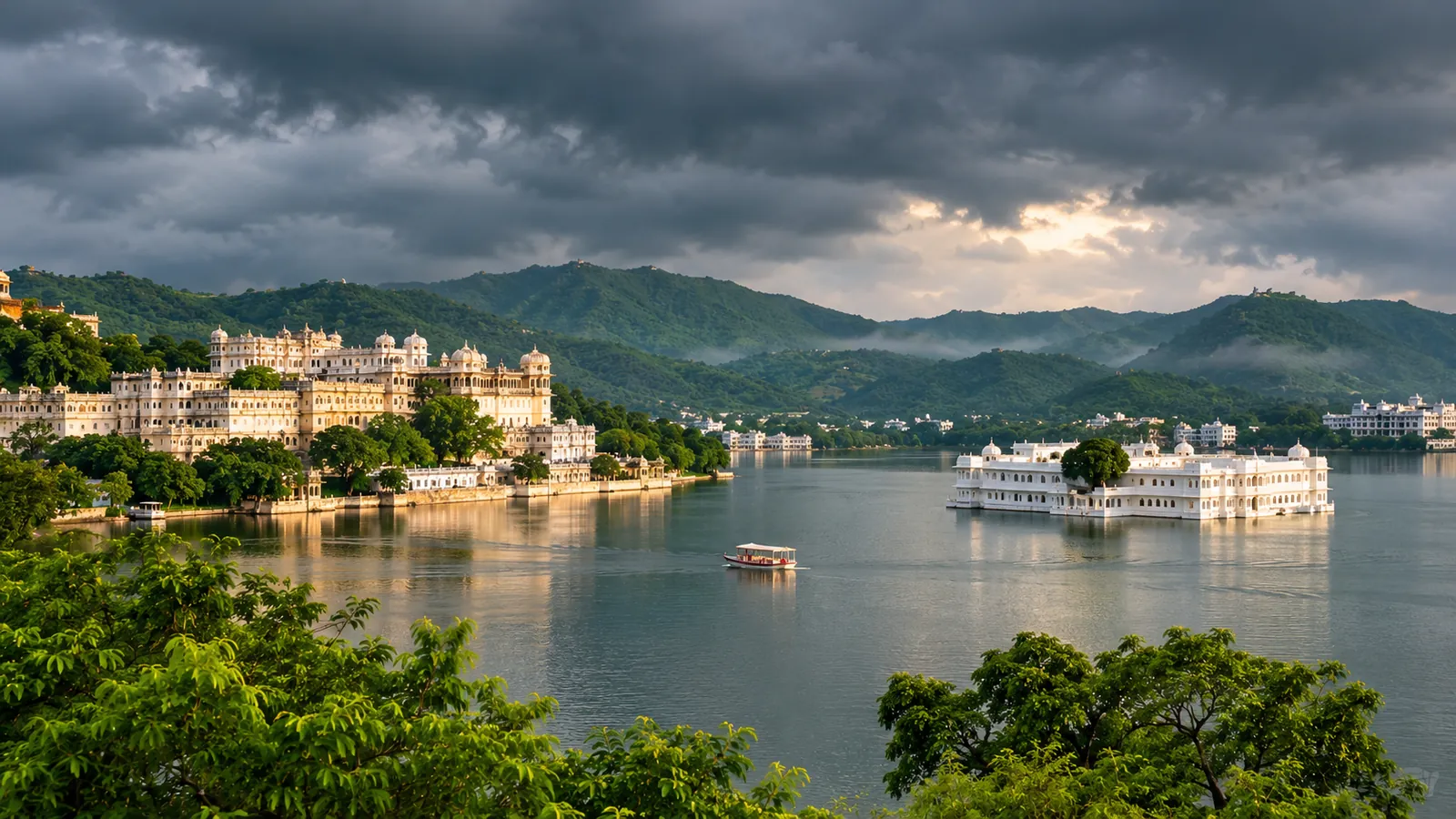
- Monsoon advantages: green landscape, few tourists, lower hotel prices.
- Monsoon disadvantages: showers, high humidity, sometimes roadworks or delays.
- No desert in summer: Jaisalmer and Bikaner are too hot from April to September.
12. Crowds, prices and when to book
High season in North India runs from October to March, with the biggest crowds from mid-December to mid-January. Hotels are then most expensive and fill up fastest, and our drivers are booked quickly in those weeks too.
| Period | Crowds | Hotel prices | When to book |
|---|---|---|---|
| Mid-December – mid-January | Very busy | Highest | 4 to 6 months ahead |
| October – November, February – March | Busy | High | 3 to 4 months ahead |
| April and September | Quiet | Lower | 1 to 2 months ahead |
| May – August | Very quiet | Lowest | A few weeks ahead |
The daily price of the car with driver depends on the car and the number of people, not on the crowds at the monuments. See our prices page for current amounts. Prices can change in the future; you always receive a personal proposal with a fixed price first.
13. Travelling in the school holidays
Travelling with children, or tied to school holidays? Then it is good to know how the European holidays fall in India.
| Holiday | Weather in North India | Our advice |
|---|---|---|
| Autumn half-term (October) | Warm and dry | Very good, extra festive around Diwali |
| Christmas holidays (late December) | Cool, chance of fog | Good, but busy and expensive: book early |
| February half-term | Sunny and pleasant | One of the best times |
| Easter and May holidays (April – May) | Hot | Only short, or head to the mountains |
| Summer holidays (July – August) | Monsoon or hot | Better Ladakh or the Himalaya |
For families, the Golden Triangle with a trip to Ranthambore for a tiger safari is a great choice in the autumn or February holidays. In our experiences you can read what other travellers saw in different months.
14. What to pack for each season
What you pack depends a lot on the month. Some things you always need, like clothes that cover shoulders and knees for temples, and easy shoes you can slip off quickly.
- October – November and February – March: light clothes, one jumper or fleece for the evening, sunscreen and a hat.
- December – January: layers, a warm jacket for morning and evening, a hat for the desert night and perhaps a thermal top.
- April – June: very light, airy clothes, a cap, lots of water and electrolytes.
- July – September: a light rain jacket or umbrella, quick-dry clothes and good sandals.
- Always: a scarf for temples, a universal adapter, cash in small notes and a copy of your e-Visa.
Apply for your India visa online on the official website indianvisaonline.gov.in. Before you go, also read your government’s current travel advice, for example the UK travel advice for India.
15. How to plan your trip with our drivers
Since 2010, The Pearls of India has put travellers directly in touch with experienced English-speaking drivers in Delhi, with no travel agency in between. Babu has been driving since 1996 and knows every route in every season. You pay the driver yourself: 50% on arrival in Delhi and 50% halfway through the trip.
| Car | People | Per day | 14 days |
|---|---|---|---|
| Suzuki D-zire | 1 – 3 | €59 | €826 |
| Toyota Innova Crysta | 3 – 5 | €75 | €1,050 |
| Tempo Traveller | 4 – 8 | €110 | €1,540 |
Included are fuel, tolls, parking, taxes, insurance and an average of 200 km per day. Hotels, entrance fees, guides and tips you pay yourself. Please note: prices can change in the future. The price in your personal proposal is the price that applies. What a day with your driver looks like is explained in our guide Private driver in India. Read more about Babu and his colleagues on our drivers page.
Get a personal proposal with a fixed price
Tell us in which month you want to travel, with how many people and which places you want to see. We check whether that month suits your route, and you get a tailor-made proposal with a clear price for the car and driver. Use the contact form or email info@thepearlsofindia.com.
Plan your trip in 3 steps
- Choose your month and route. Use the tables above to see what fits together.
- Send your travel idea. Through the contact form, with your dates and number of people.
- Receive your proposal. Together with the driver, we suggest a route and a fixed price.
Your best-time-to-travel checklist
- Does your travel month suit all the regions on your route?
- Is there a festival during your trip that you want to see, or rather avoid?
- Travelling in December or January: have you allowed for morning fog?
- Have you booked your hotels early enough if you travel in high season?
- Does your Taj Mahal visit not fall on a Friday?
- Have you packed the right clothes for the season?
- Have you applied for your e-Visa in time?
Frequently asked questions
When is the best time to visit India?
For North India, the Golden Triangle and Rajasthan, the best time is October to March. November, February and early March are the nicest months: dry, sunny and not too hot.
What is the best month to go to India?
February is one of the best months. It is sunny and dry with about 20 to 25 °C during the day, the Christmas crowds are gone and the winter fog has usually cleared.
Is December a good month for India?
Yes, December is good, but it is busy and hotels are expensive around Christmas and New Year. In the morning there can be fog around Delhi and Agra, and the nights are cool.
Can you still visit Rajasthan in April?
You can, but it is already 35 to 40 °C. You can only walk around early in the morning and late in the afternoon. We do not recommend April for the desert around Jaisalmer.
When is the monsoon season in India?
In North India the monsoon usually runs from late June into September. It does not rain all day, but there are often a few heavy showers. The landscape is green and the monuments are quiet.
When is Holi in 2027?
Holi, the festival of colours, falls on Monday 22 March 2027. The evening before, on 21 March, Holika Dahan is celebrated with bonfires.
When is Diwali in 2027?
Diwali, the festival of lights, falls on Friday 29 October 2027. Hotels fill up quickly around Diwali, so book in time.
When is the Pushkar Camel Fair in 2027?
The Pushkar fair lasts about a week and ends with the full moon of Kartik Purnima, around 14 November 2027. Check the official dates shortly before your trip.
What is the best time to combine India and Nepal?
October and November are ideal: clear weather in Nepal with great Himalaya views, and dry and pleasant weather in North India. February and March are also good.
Is it cold in India in January?
During the day it is about 20 °C in Delhi and Rajasthan, but at night it can cool down to 5 to 8 °C. Bring warm layers, especially if you sleep in a desert camp.
When is the Taj Mahal closed?
The Taj Mahal is closed every Friday. Plan your visit on another day; your driver is happy to adjust the route.
How far ahead should I book?
For mid-December to mid-January we recommend 4 to 6 months ahead. For the rest of the high season, 3 to 4 months is usually enough.
Before you go
In the end, the best time to visit India is the time that suits your trip. If you love sun and calm, choose November or February. If you want to see the colours of Holi or the lights of Diwali, plan your trip around those dates. And if you are free in summer, the monsoon shows you a green and quiet India.
Whatever you choose: with your own driver you adapt your day to the weather. If it is foggy, you leave later. If it is hot, you start early and rest in the afternoon. That way you get the best out of every month.
Every season in India has its own beauty. We help you find yours.
When do you want to visit India?
Tell us your travel month and wishes, and we will send you a personal proposal with a fixed price.
Read more
- Visiting the Taj Mahal 2027: tickets, timings and tips
- Tailor-made India tour 2027: 4 itineraries, costs and tips
- Golden Triangle with a private driver: the 8-day route
- Rajasthan with a private driver: the 16-day route
- Private driver in India: how it works and what it costs
- Trip examples for India and Nepal


